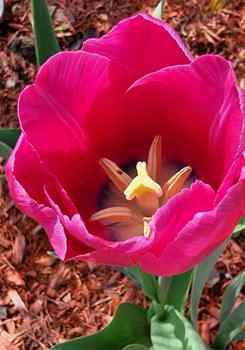
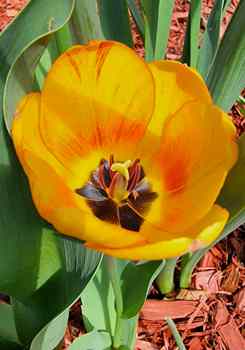
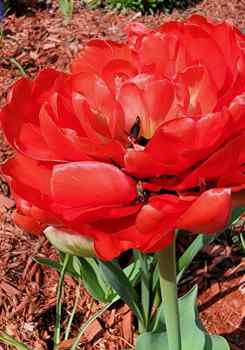
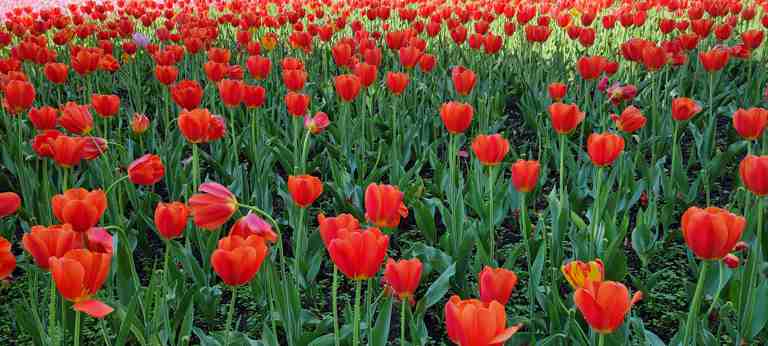
Tulips are beautiful, vibrant flowers that are relatively easy to grow, making them a favorite among gardeners. Tulips bulbs flowering in April or May, filling gardens with color. Most are cup-shaped blooms with one flower on each stem, although a few are multi-flowering, ruffled, fringed, or double blossoms.
Tulip bulbs require full sun, neutral to slightly acidic, compost-enriched soil, and prefer well-drained, drier soil since wet conditions will rot bulbs. Most tulip species plants or “perennialized”-branded tulip bulbs come back yearly with a winter chill period in a cold-weather zone.
Here’s a comprehensive guide on how to plant, grow, and care for tulips:
Tulips Basics
Tulips are native to Central Europe and Eastern Asia, but they’re cultivated and hybridized all over the planet. They’ve been cultivated for more than 1,000 years, and now are there are more than 150 species of tulips and more than 3,000 varieties. They’re categorized into 15 groups defined by characteristics like size, bloom time, petal shape and color.
Tulip flowers are usually are cup-shaped, but some are star- or goblet-shaped. The blooms may be single, double, ruffled or fringed, and the tulip plant ranges in height from 3 inches to 28 inches, depending on the variety. Tulips only produce flowers for a week or so, but that week is a glorious one if you’re a tulip lover.
Choosing the Right Variety
Tulips come in various colors, shapes, and sizes. Select the type that best suits your garden.
The main types are:
Single early tulips: Early bloomers, great for colder climates.
Darwin hybrids: Known for large, vibrant flowers, and strong stems.
Parrot tulips: Unusual, ruffled petals in vibrant colors.
Tulips are sometimes grown as annuals—especially the hybrid varieties. Unless labeled as “perennialized” or “naturalizing,” hybrids rarely re-bloom the following year. Centuries of hybridizing have weakened the bulb’s ability to come back year after year. Most tulips bloom well for only one or two years. Tulips have the best chance of establishing themselves as perennials in the western mountains of the United States, where there are gritty soils, cold winters and hot, dry summers similar to their ancestral homelands in Turkey and Russia. Those of us in the rest of the country should treat tulips as annuals, planting new bulbs every fall. Luckily, tulip bulbs come ready to bloom their hearts out the first season, and are priced affordably enough to toss into the compost after they finish flowering.
When to Plant Tulips
Tulips are best planted in the fall, about 6–8 weeks before the first frost. This allows the bulbs to establish roots before the winter cold sets in. In warmer climates, you can plant them in late winter for a spring bloom.
Selecting a Location
Tulips need a sunny spot to thrive. Choose a location that gets at least 6 hours of sunlight per day. They also need well-drained soil to avoid rotting. If your soil is clay-heavy, improve drainage by adding compost or sand.
Planting Tulips
Step 1: Prepare the soil by loosening it to a depth of about 8 inches and mixing in compost or well-rotted manure.
Step 2: Dig holes about 6–8 inches deep. The depth depends on the size of the tulip bulb—larger bulbs need deeper planting.
Step 3: Place each tulip bulb with the pointed end facing up. Space the bulbs 4–6 inches apart.
Step 4: Cover the bulbs with soil, then gently water the area to settle the soil.
Watering and Fertilizing
Watering: Tulips need moderate watering. After planting, water thoroughly to ensure the soil is moist. Keep the soil moist during the growing season, but avoid overwatering as tulips don’t like soggy roots.
Fertilizing: Tulips don’t require much fertilizer. You can apply a balanced fertilizer in the early spring when you see the first shoots. Too much fertilizer can lead to weak stems and poor blooms.
Mulching
Applying a 2–3 inch layer of mulch over the soil after planting helps maintain moisture, keeps the soil cool, and prevents weeds from growing. It also offers protection from harsh winter temperatures, especially in colder regions.
Care During Growing Season
Spring Growth: Once tulips sprout, ensure they are not in competition with weeds. If you notice weeds, gently remove them without disturbing the bulbs.
Staking: Some taller varieties may need staking to prevent them from falling over, especially in windy conditions.
Deadheading: After the flowers bloom, remove the spent flowers to prevent the plant from wasting energy on seed production.
After Bloom Care
Leave the Leaves: After blooming, let the foliage stay in place and die back naturally. The leaves help the bulb store energy for the next season. Once the leaves turn yellow, they can be removed.
Watering After Blooming: Continue to water lightly until the foliage has completely died back.
Overwintering Tulips
If you live in an area with harsh winters, tulips should be fine as they are hardy bulbs. However, you may want to add extra mulch around the bulbs to protect them from severe cold.
Digging Up Tulips (Optional)
In warmer climates where tulips may not survive the summer heat, you can dig up the bulbs after the foliage dies. Clean them off and store them in a cool, dry place until next fall. In colder climates, tulips can be left in the ground and will return year after year.
Pest and Disease Control
Pests: Tulips are relatively pest-resistant, but sometimes they may attract aphids, slugs, or rabbits. Use natural deterrents or insecticidal soap if necessary.
Diseases: Fungal infections like botrytis blight can affect tulips. Good soil drainage and proper spacing will help prevent most fungal issues.
Summary
Plant in fall for spring blooms.
Choose a sunny, well-drained spot.
Plant bulbs 6–8 inches deep and space 4–6 inches apart.
Water moderately and apply light fertilizer in spring.
Allow leaves to die back naturally before removing.
Mulch for winter protection, and dig up bulbs if needed in warmer climates.