|
Getting your Trinity Audio player ready...
|
How many types of Tulips are there?
Tulips are the stars of the spring garden, with their stately stems, colorful blooms, and early flowers. They’re also a versatile choice for gardeners and are available in an array of colors, sizes, and shapes to suit any space. Whether you prefer the classic look of the single tulip or the showy blooms of parrot tulips, they’re a favorite for perennial gardens, landscape projects, and cut flower arrangements.
There are thousands of tulip varieties to choose from, but they can be divided into a number of categories, each with their own defining characteristics. Here are the main types:
1. Single Early Tulips
2. Double Early Tulips
3. Triumph Tulips
4. Darwin Hybrid Tulips
5. Lily-Flowered Tulips
6. Fringed Tulips
7. Parrot Tulips
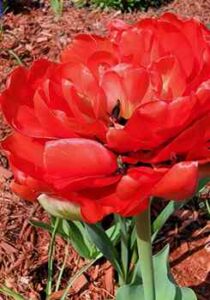
8. Double Late Tulips (Peony Tulips)
9. Rembrandt Tulips
10. Emperor / Fosteriana Tulips
11. Kaufmanniana Tulips
12. Greigii Tulips
13. Species Tulips
14. Viridiflora Tulips
15. Single Late Tulips
1. Single Early Tulips
- Bloom Time: Early spring
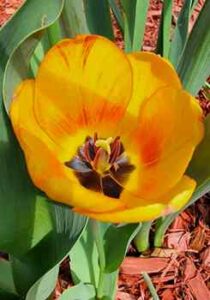
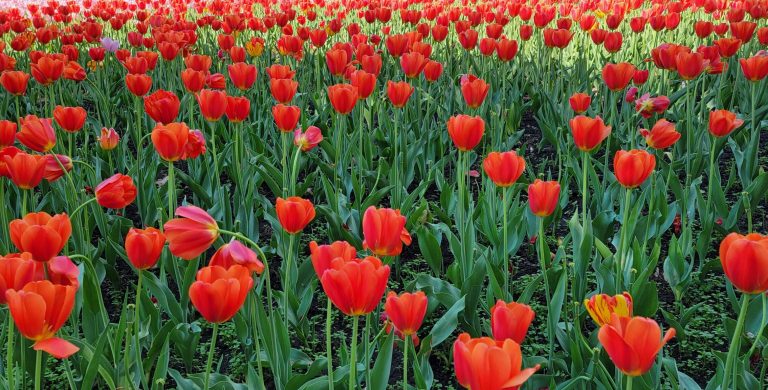
- Description: These tulips are among the first to bloom, often in March or early April. They have simple, cup-shaped flowers and are typically smaller in size. Common colors include red, yellow, pink, and white.
- Examples: ‘Alaquines,’ ‘Red Emperor’
2. Double Early Tulips
- Bloom Time: Early spring
- Description: Similar to single early tulips, but with multiple layers of petals that give them a fuller, peony-like appearance. They also bloom early in the season.
- Examples: ‘Peach Blossom,’ ‘Monte Carlo’
3. Triumph Tulips
- Bloom Time: Mid-spring
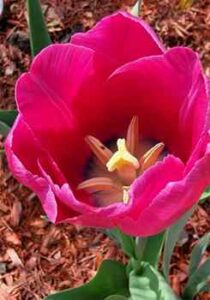
- Description: Known for their strong, upright stems and classic tulip shape, these tulips are a cross between early and late varieties. They come in various colors, including reds, yellows, purples, and whites.
- Examples: ‘Spring Green,’ ‘Apeldoorn’
4. Darwin Hybrid Tulips
- Bloom Time: Late spring
- Description: These tulips are tall and sturdy, with large, rounded blooms. They are among the most popular tulips due to their vibrant colors and ability to last longer than most other types. Ideal for cutting.
- Examples: ‘Golden Parade,’ ‘Banja Luka’
5. Lily-Flowered Tulips
- Bloom Time: Mid-to-late spring
- Description: These tulips have long, narrow petals that curl back, resembling a lily flower. They tend to have tall stems and elegant, delicate blooms.
- Examples: ‘Purple Dream,’ ‘Ballade’
6. Fringed Tulips
- Bloom Time: Late spring
- Description: These tulips feature unique, ruffled petals that have a fringed edge, adding an elegant texture. They can come in a variety of colors, often with a contrasting color at the edge of the petals.
- Examples: ‘Fringed Elegance,’ ‘Burgundy Lace’
7. Parrot Tulips
- Bloom Time: Late spring
- Description: Parrot tulips are known for their dramatic, frilly petals that often look like feathers. They come in vibrant, contrasting colors, such as red and yellow, or purple and white.
- Examples: ‘Estella Rijnveld,’ ‘Black Parrot’
8. Double Late Tulips (Peony Tulips)
- Bloom Time: Late spring
- Description: These tulips have large, double flowers that resemble peonies due to their many layers of petals. They are usually very full and soft-looking, offering a romantic and dense appearance.
- Examples: ‘Angelique,’ ‘La Belle Epoque’
9. Rembrandt Tulips
- Bloom Time: Mid-to-late spring
- Description: Known for their striking streaked or feathered patterns in a variety of colors, Rembrandt tulips are a unique, historical variety. Their unique markings make them highly ornamental.
- Examples: ‘Rembrandt,’ ‘Carnival de Nice’
10. Emperor / Fosteriana Tulips
- Bloom Time: Early to mid-spring
- Description: These tulips are known for their large flowers and bright, clear colors. They often bloom early in the season and have a very striking appearance with a long-lasting effect.
- Examples: ‘Tulip Fosteriana,’ ‘Red Emperor’
11. Kaufmanniana Tulips
- Bloom Time: Early spring
- Description: Known for their compact growth and star-shaped flowers, Kaufmanniana tulips are often seen blooming in late winter to early spring. These tulips are great for naturalizing.
- Examples: ‘Heart’s Delight,’ ‘Early Harvest’
12. Greigii Tulips
- Bloom Time: Early to mid-spring blooms
- Description: Greigii tulips are great neutralizers, and will spread and return for many years with more and more colorful blooms in early to mid spring. Colors include red, pink orange, yellow, and white. They produce bowl-shaped blooms and have uniquely striped or spotted foliage that adds extra interest. Greigii tulips are compact and bright, and are great candidates for forcing indoors.
- Examples: ‘Tulipa ‘Compostella’
13. Species Tulips
- Bloom Time: Early to mid-spring blooms
- Description: Species tulips encompass a range of non-hybrid tulip varieties with common characteristics. They’re typically smaller than hybrids, perennialize and naturalize more reliably, and some can produce more than one bloom per stem. Species tulips often have striped or variegated foliage, and come in many colors including red, yellow, pink, and orange. They’re a great choice for borders and rock gardens.
- Examples: ‘Clusiana species’
14. Viridiflora Tulips
- Bloom Time: Late spring blooms
- Description: As their name suggests, viridiflora tulips are characterized by green striped flowers. Their blooms are remarkably long lasting, and they make an eye-catching addition to your cottage garden or cut flower displays. Aside from the typical green stripe, viridiflora flowers come in a range of colours. Their long lasting blooms make them a great addition to your cut flower garden.
- Examples: ‘Tulipa ‘Groenland’ or listed as ‘Greenland’
15. Single Late Tulips
- Bloom Time: Mid to late spring blooms
- Description: Single early tulips are known for their tall stems and large blooms, which appear in mid to late spring. They come in tons of colors, from white to red to purple-black. Each bloom is comprised of a cup-shaped, 6 petal flower, and they can grow up to twice as tall as their early spring counterparts. Plant them at the back of a bed where their height will let them stand out, or add them to a cut flower arrangement for color and elegance.
- Examples: ‘Andre Rieu’, ‘Antoinette’, ‘Avignon’, ‘Belle du Monde’, ‘Big Smile’, ‘Blushing Beauty’, ‘Blushing Lady’
Each type of tulip has its own distinct charm and ideal planting time. Many varieties are used in gardens, landscaping, and flower arrangements, adding vibrant colors to spring landscapes.
Hundreds of named hybrids and cultivars exist across the various tulip divisions. Many hybrid types tend to be relatively short-lived. A handful of the popular ones include:
- ‘Purissima’ (Fosteriana division): Very early, pale yellow petals that fade to white
- ‘Ballarina’ (Lily division): Fragrant with flared, pointed, orange petals
- ‘Ballarina’ (Fosteriana division): Sunny yellow with white tips that look like feathers
- ‘Prinses Irene’ (Triumph division): Rembrandt-style orange petals streaked with burgundy
- ‘Spring green’ (Viridiflora division): White petals with green center stripes; late-blooming and long-lasting
- ‘Las Palmas’ (Fringed division): Large, fringed white petals with a red flame, long-lasting cut-flower.
- ‘Vanilla Coupe’ (Double late division): Yellow, double five-inch blooms with an outer layer of green petals, blooms in late May.
‘Diamond Jubilee’ (Triumph division): Mid-spring bloomer with creamy white petals edged in vivid pink.
Types of Tulips